
What Is Merchant Underwriting?
Merchant underwriting is the risk review an acquiring bank conducts before agreeing to process your card payments. An acquirer, or acquiring bank, holds your merchant account and moves card sales into your business bank account.
The review decides whether you're approved and on what terms. Sometimes, those terms include a reserve or a monthly volume cap.
Many owners treat it as an extra step the bank invented. But card networks require it, and complete paperwork is how you pass on the first try.
Why Underwriting Exists
From the applicant's point of view, underwriting feels like a bank being cautious. Why would anyone need months of bank statements just to let you accept a credit card?
These rules come from Visa and Mastercard, not from a nervous loan officer. Visa expects acquirers to complete due diligence on a prospective merchant before signing them. That means confirming the business meets Visa's merchant qualification standards.
You can see this expectation in the Visa Merchant Data Standards Manual and the Visa Payment Facilitator and Marketplace Risk Guide.
Mastercard goes further. Its Security Rules and Procedures, Merchant Edition sets out required screening for new merchants in Chapter 7. Chapter 11 covers the MATCH system, which acquirers must check before boarding a merchant.
So the acquirer works a lot like a co-signer on a loan. If a merchant has too many fraud cases and chargebacks and then disappears, the acquirer covers the loss. That is why they check merchants carefully before approving them.
One quick distinction: Boarding is the full process of setting up your account. Underwriting is when they decide whether you qualify.
What Underwriters Check
Both Visa and Mastercard require this review. The five areas below reflect what acquirers assess under their rules.
Who You Are: Identity and Ownership (KYC)
Underwriters start with your legal entity. They check that your LLC or corporation is registered and in good standing.
They then check who owns the company. If another company owns yours, they trace ownership until they find the beneficial owner who owns or controls the business.
Those owners get two AML checks:
Screening against sanctions lists
Politically exposed person status (someone who holds or recently held a prominent public role)
They're confirming the business is real and legal. Then they confirm who controls it.
What satisfies it:
Formation documents
A government ID for each owner
A short ownership breakdown showing who holds what percentage
Your Business and Website
Next comes the business itself. What do you sell? Where are you based, and where are your customers?
Industry and geography both shape risk, so expect questions on each.
Then the underwriter opens your website. The site needs to match the application:
Products and prices line up
Refund policy and shipping terms are easy to find
Contact details are visible
Your PCI compliance setup gets reviewed here too. PCI DSS is the card industry's security standard for handling card data.
What satisfies it: A live website that tells the same story as your application.
Your Finances and Credit
Bank statements show how cash moves in and out. Underwriters want to see that your business can handle refunds and chargebacks.
For smaller businesses, underwriters may also check the owner's personal credit.
There is no set credit score cutoff. Poor credit does not always mean rejection, but it may lead to more questions or extra conditions.
Newer businesses get more scrutiny, and that's normal. Without a track record, the underwriter leans more on your plan and your owners' history.
What satisfies it:
Recent business bank statements
Financial statements, if requested
A short note explaining any odd dips or spikes
Your Processing and Chargeback History
A chargeback happens when a customer disputes a charge with their card issuer, and the money is taken back from you. "Friendly fraud" is when the customer got the product but disputes anyway.
If you've processed cards before, your old statements tell the underwriter a lot:
Your volume
Your average ticket size
How often customers dispute charges
How often you issue refunds
Patterns matter more than any single month.
What satisfies it: Your last few processing statements. If you're new, write a plain explanation of how you'll handle disputes and refunds.
Your Risk Category and the MATCH or TMF Check
Every merchant gets a Merchant Category Code (MCC). It's a four-digit code that labels your industry.
Your MCC sets your starting risk level before anyone reads a single statement. Then comes the terminated merchant check:
MATCH (Mastercard Alert to Control High-risk Merchants): Mastercard's database of merchants whose accounts were closed for reasons like excess chargebacks or fraud.
Terminated Merchant File (TMF): Visa's version, which acquirers search through the Visa Merchant Screening Service.
A listing usually stays on file for five years. It follows you to every acquirer.
If you were terminated before, say so upfront. The underwriter will find it anyway, and hiding it looks far worse than the original problem.
Your Underwriting Readiness Checklist
What they check | The one thing that satisfies it |
Identity and ownership | Business registration, owner IDs, ownership breakdown |
Business legitimacy | A live website that matches your application, with clear refund and shipping terms |
Finances | Recent bank statements, financials if requested |
Processing history | Last few processing statements (if you have prior processing) |
Chargebacks | A written dispute-handling process |
MATCH/TMF | Full disclosure of any prior termination |
PCI | Proof of PCI readiness |
Exact documents vary by acquirer, so treat this as a starting point.
Traditional vs Instant (Aggregator) Merchant Underwriting
If one provider can approve you in minutes, why does another take days?
The answer is that they're doing the review at different times.
Direct merchant account | Aggregator or payment facilitator | |
Speed | Slower up front | Very fast sign-up |
When the real review happens | Before you process your first sale | Mostly after you start processing, through ongoing monitoring |
Risk of later holds | Lower, since questions get answered early | Higher, since issues surface once money is moving |
Best for | Established or high-risk businesses with steady volume | New, low-risk businesses testing the waters |
With a direct merchant account, you get your own merchant ID. The acquirer underwrites you before a single dollar moves.
Aggregators and payment facilitators work differently. Think of the large all-in-one processors. They place many merchants under one shared master account.
Sign-up is quick since most of the checking happens later, as transactions come in. A fast approval is not finished underwriting. That's why some merchants get approved in minutes, then see funds held weeks later.
Aggregators work well for plenty of businesses. You just want to know which kind of approval you're getting.
The Possible Outcomes of Merchant Underwriting
When you’re approved, you get standard terms and can start processing. But underwriting rarely ends in a simple yes or no. You can get one of the responses below.
Approved with Conditions
The acquirer might add one or more conditions to approve you:
A rolling reserve, which holds back part of each day's sales for a set period before releasing it
A cap on your monthly volume
A shift in pricing
Extra monitoring for a while
These conditions let the acquirer say yes to a business it can't fully measure yet. It's completely reasonable to ask how and when those conditions might ease.
Declined
These are the usual reasons:
An industry that's prohibited outright
A past termination
High chargeback rates
Thin financials paired with big volume projections
A website that contradicts the application
Our guide on why applications get rejected covers each one.
Request for More Information
This one worries people, but it’s not a rejection. The underwriter wants to approve you and needs more details to do so.
How to Pass Merchant Underwriting the First Time
Small mistakes and missing information can slow down your application. Here’s what you can do to avoid it:
Gather documents before you apply. Complete the checklist by collecting all the documents before you apply. Missing paperwork can delay your approval.
Match your website to your application info. Your products and prices should line up with what you wrote, and your refund and shipping policies should be easy to find.
Disclose everything. Past terminations and expected volume belong on the application. So do realistic shipping times and any planned changes to your business model.
Show your numbers. Base your projected volume and average ticket on real sales data or a written forecast. Guesses that miss by a wide margin look like risk.
Answer underwriter requests quickly and keep copies. Accounts do get closed over unanswered document requests. Save everything you send, with dates.
Be ready to explain chargebacks and refunds. A one-page written process shows you've planned for disputes before they happen.
Get reserve and hold terms in writing before you sign. Ask what percentage could be held and for how long. Verbal promises are hard to enforce later.
Start with an acquirer that handles your category. Applying to a bank that only boards low-risk merchants sets a high-risk business up for a decline.
If you want a second opinion before applying, our high-risk payment consulting team can provide it.
Why High-Risk Underwriting Is Different
A business can be considered "high-risk" for a few reasons:
Its industry sees more chargebacks.
Customers receive products weeks or months after paying, which extends the dispute window.
It needs age verification or sits in a legal gray area.
It had a past account issue. This can push any business into the category.
More risk means the acquirer wants more information before signing. So reviews take longer and ask harder questions. Reserves and volume caps apply more often.
An adult merchant account is a good example. The business is legal. But chargeback patterns and card network rules still require a closer look.
Working with an acquirer that knows those rules can make the process easier. You spend less time explaining how your industry works.
Merchant Underwriting Does Not End at Approval
You got approved, so you're done, right? Not quite.
Visa's acquirer risk standards require acquirers to keep monitoring merchants and review major changes in their activity.
Approval reflects your business when you applied. If things change, the acquirer may review your account again, and that review can lead to:
New pricing
A reserve
Closure, in serious cases
Common triggers include:
Adding new products
Switching to a subscription model
A sudden jump in volume
Rising chargebacks
That volume spike deserves a closer look. From the outside, a great sales month and a fraud attack can look the same. The acquirer can't tell which one it is without asking.
Here's what prevents most problems: tell your processor before you change something big.
A two-line email about next month's product launch can save you a frozen account. Our ongoing risk management focuses on catching these moments early.
How MobiusPay Helps With Merchant Underwriting
MobiusPay has processed payments for high-risk merchants since 2010. Our consulting starts before you apply. We help you prepare the application and close gaps an underwriter would flag.
From there, we match your business with an acquirer that accepts your category. We anticipate the questions underwriters will ask, so your answers are ready before the request arrives.
Support continues after approval. Our risk tools connect directly to Visa's Order Insight platform, which can resolve some customer complaints before they become chargebacks.
If you're preparing an application or recovering from a decline, talk to our consulting team about your next steps.
Frequently Asked Questions
Why was my application declined in underwriting?
Common reasons include a prohibited industry, a past termination, high chargebacks, thin financials, or a website that doesn't match the application. Ask the acquirer for the exact reason. Fix what you can. Then reapply, or try an acquirer that works with your category.
How long does merchant underwriting take?
It varies by acquirer, your risk level, and how complete your application is. High-risk categories take longer since the review goes deeper. Missing paperwork and website mismatches slow things down. Slow replies to underwriter questions do, too.
Can I be re-underwritten after I am approved?
Yes. Acquirers monitor accounts continuously and can review you again when your business changes. See the section above on underwriting after approval, or read about our risk management services.
What is the difference between underwriting and account setup?
Setup, often called boarding, covers everything it takes to get you processing, from paperwork to gateway configuration. Underwriting is the risk review in the middle of all that. It answers two questions: are you eligible, and on what terms?
Why was my account frozen after I was approved?
Fast approval often comes from aggregators, where more of the review happens after you start processing. A sudden jump in volume can trigger that review. So can a new product or a rise in disputes. A hold on your funds often comes with it. Telling your processor about big changes can prevent that.
Related Articles
What Is Considered a High-Risk Merchant?
A high-risk merchant is a business banks see as prone to chargebacks, fraud, or legal risk. Here is what lands you there, and what to do.

The Truth About "Instant Approval" Adult Merchant Accounts
Instant approval doesn't exist for adult merchant accounts. Here's what providers are really offering, what underwriters check, and how to spot a setup for failure.
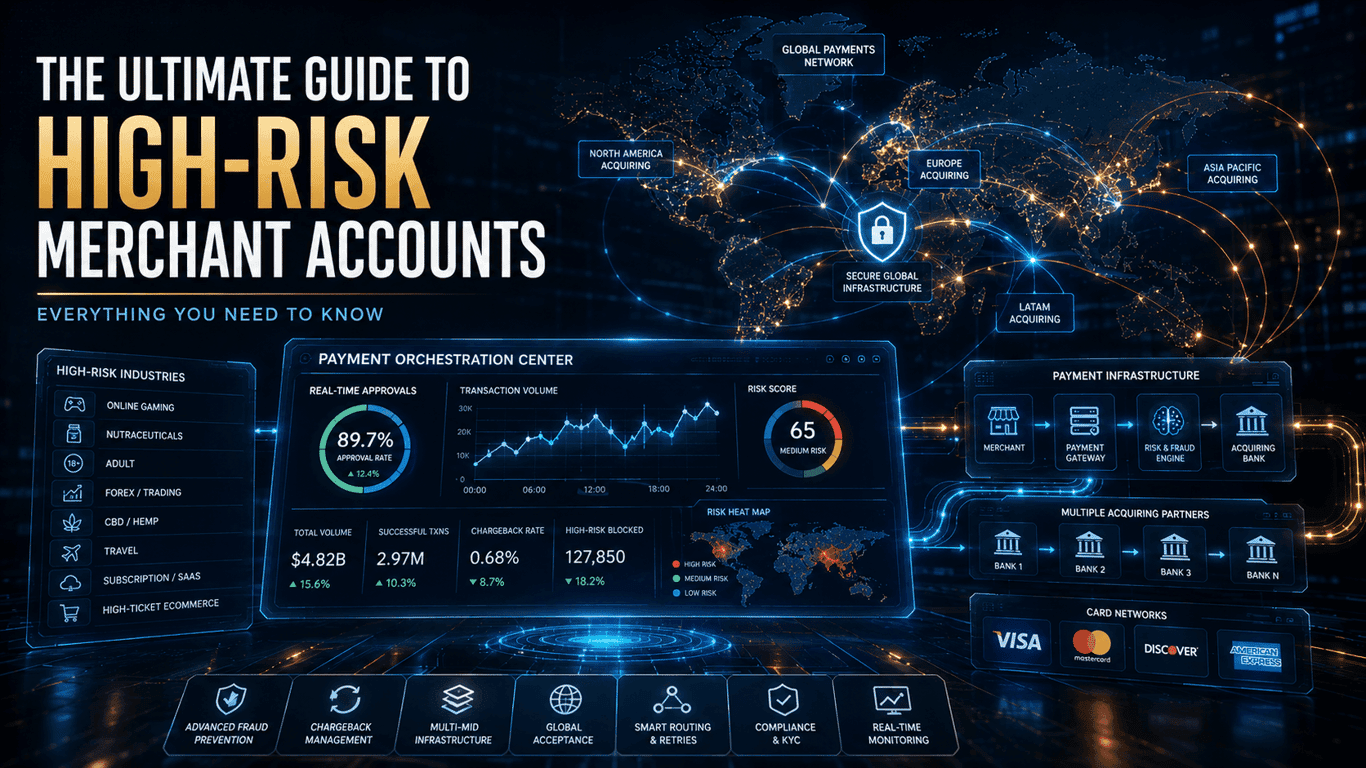
The Ultimate Guide to High-Risk Merchant Accounts: Everything You Need to Know
Businesses need payment processing solutions that can handle the increased risk of chargebacks.